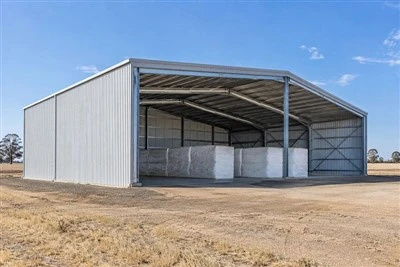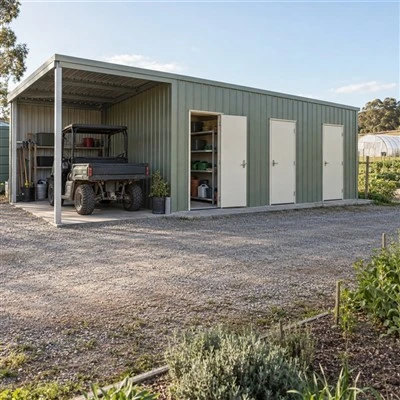

If you’re running a machinery workshop, whether you’re working on farm equipment, construction gear, or heavy-duty tools, choosing the right shed isn’t just about having a place to store stuff—it’s about protecting your investment, keeping your work efficient, and even saving money on long-term upkeep. One of the biggest decisions you’ll make early on is the roof style, and two of the most popular options are gable roofs and hip roofs. I’ve been selling machinery workshop sheds for a few years now, and I can’t tell you how many customers come in confused about the difference between these two, especially when they’re dealing with heavy, bulky machinery that needs specific layout and protection. Let’s break it down plain and simple, with real talk about what works best for your setup.
First, let’s get the basics straight because it’s easy to mix these up if you’re not a construction person. A gable roof (sometimes called a “shed roof” but wait, no—wait, actually, shed roofs are a different thing entirely, let’s not muddle that) is that classic peaked roof you see on old farmhouses: two sloping sides that meet at a central ridge, making a triangular end wall (the gable) on either side. It’s like a big triangle cut down the middle. A hip roof, on the other hand, has four sloping sides—all of them slope downward from the central ridge, so there are no vertical end gables at all. Each side meets the next at a corner, kind of like a pyramid but stretched out longer instead of tall. Yeah, that’s the gist, but when you’re talking about machinery sheds, those small differences in shape turn into big impacts for your space, your gear, and your wallet.
Let’s start with gable roofs, because they’re super common for machinery sheds, and there’s a reason for that—cost and space. When I show customers a gable roof option, the first thing they notice is how much open floor space they get, especially at the ends. Because the gable walls are vertical, not sloped, the end of the shed is just as high as the main walls, so you can fit big, tall machinery (like tractors with rops, or excavator arms) right up to the end wall without worrying about hitting a sloped roofline. That’s a huge win if your machinery is bulky—you don’t have to leave extra space just for the roof slope. Also, gable roofs are way cheaper to build than hip roofs. Since they only have two slopes, you need less material for the rafters, sheathing, and roofing itself. For someone just starting out or looking to keep their initial costs down, that’s a big deal. I’ve seen customers go with gable roofs when they’re setting up truck maintenance sheds too, because trucks have that same need for end space to get in and out easily.
But wait, gable roofs aren’t all sunshine and tractors. One of the biggest downsides is wind. Because those end gables are flat (well, triangular) and stick out, they catch wind like a sail. I’ve had a few customers in windy areas (like the Great Plains, or parts of the Pacific Northwest with heavy storms) come back saying their gable roofs had leaks or even damage after a bad wind gust—sometimes the whole roof would shift a little, which messed up the seal around the edges. Another thing: rain and snow runoff. On a gable roof, all the water and snow runs down to the two ends, right? So you have to make sure your gutters and downspouts are placed perfectly, otherwise you’ll get pooling at the ends, or water dripping right where your machinery is parked. Snow can also pile up unevenly on those slopes, especially if you live somewhere with heavy snow, which can put extra weight on one side of the roof. For smaller machinery that’s lighter, that’s not a big deal, but for a 10,000-pound tractor, uneven weight is a risk.
Now let’s talk hip roofs, which are the underrated workhorse for heavy-duty machinery sheds, in my opinion. The biggest plus here is wind resistance. Since all four sides slope down, there’s no flat end to catch wind—wind flows around the roof instead of pushing against it. That’s a massive benefit if you’re in an area with frequent storms, or if your shed is in a wide-open space with no trees or other buildings to block wind. I’ve had a customer who runs a farm in Iowa tell me his hip roof shed survived a 70-mph wind that blew two gable roofs down on neighboring farms—so that’s real value. Hip roofs also handle snow and rain way more evenly. The runoff is spread out over four sides, so you don’t have to worry about water pooling at the ends, and snow slides off more gradually instead of piling up in one spot. That means less stress on the roof structure, which is better for expensive machinery that’s sitting under it.
But there’s a catch with hip roofs, and that’s space and cost. Because all four sides slope inward, the ends of the shed have sloped walls, not vertical ones. So if you’ve got a really tall piece of machinery, say a combine with a tall bin, you might not be able to fit it right up to the end wall—you need to leave space for that sloped roof to avoid hitting it. That’s a problem for some folks, especially if their machinery is extra bulky. Also, hip roofs require more material: four slopes mean more rafters, more sheathing, and more labor to build. So initial costs are higher. I usually tell customers if they’re buying an industrial workshop shed that needs to hold heavy, high-value equipment, the extra cost of a hip roof is worth it for the durability.
Wait, but let’s not forget about other factors that tie into this, because when you’re choosing a roof for machinery, it’s not just about the roof itself—it’s about what you’re storing, how you use the space, and your local climate. For example, if you’re working on automotive workshop sheds, the needs are a bit different than for farm machinery. A lot of auto shops need tall bays to lift trucks, so a gable roof’s vertical end walls give you that extra height at the sides, which works well. But if you’re storing semi-trucks, their big, wide cabs might fit better with a hip roof’s even slope, so there’s no overhang that gets in the way when you’re backing up.
Another thing I see a lot: customizations. A lot of people think roof styles are set in stone, but with machinery workshop sheds, you can mix and match. For example, a “hip and valley” roof is a thing, but no—wait, no, for small to medium sheds, sometimes a “half-hip” roof is a middle ground. Half-hip roofs have a small hip section at the ends, so you get a little of the wind resistance of a hip roof, but you still have more vertical wall space at the ends than a full hip roof. It’s a good compromise if you want the best of both worlds without paying for a full hip roof. But honestly, most of my customers who go with half-hips end up either loving the gable or the hip more, so it’s a niche pick.

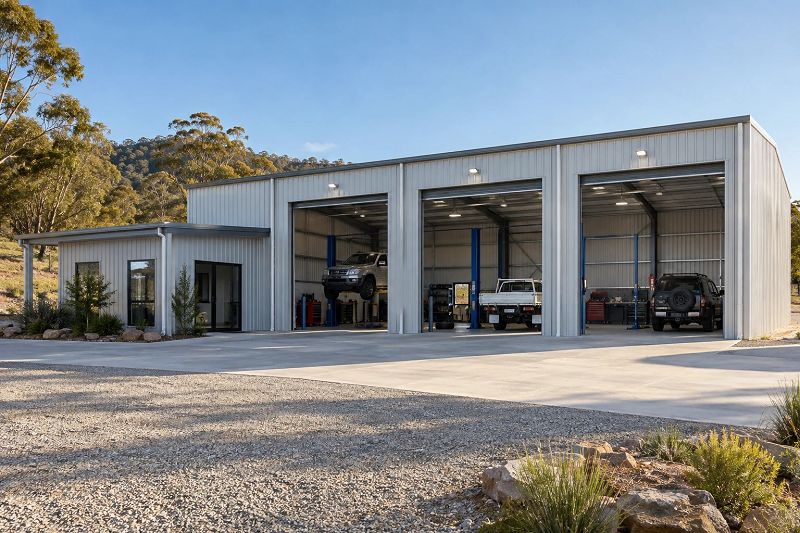
Let’s talk about maintenance too, because that’s something a lot of first-time shed buyers overlook. Gable roofs—since they have two simple slopes—are easier to repair if there’s a leak or damage. You can get up there with a ladder and fix a shingle or a hole without dealing with the four sides of a hip roof, which can be steeper and trickier to walk on. Hip roofs, on the other hand, hold their shape longer because of the four-slope design—less chance of sagging over time, which means less maintenance down the line. For someone who doesn’t want to climb on a roof every other year, that’s a big plus.
What about aesthetics? Wait, I know, functionality is key for machinery sheds, but if you’re putting it on your property, it matters too. Gable roofs are the traditional look, so they blend in better with most farm or industrial properties. Hip roofs have a more modern, sleek look, but they can look a bit out of place if your other buildings are gable style. But again, for most machinery shed owners, aesthetics are way lower on the list than function and cost.
Wait, let’s get specific with real scenarios, because that’s what matters. Let’s say you’re a small contractor with a few pieces of equipment: a skid-steer, a pickup, and a dump trailer. You’re on a tight budget, and you live in an area that doesn’t get super heavy wind or snow. A gable roof is perfect for you—you can fit all your gear, it’s cheap to build, and repairing a leak is easy. But if you’re a larger contractor with a 10-ton excavator, a bulldozer, and you’re in Wyoming where wind gusts are common? A hip roof is the way to go. It’ll protect those $100k machines better, and you won’t have to worry about the wind tearing the roof off and leaving your gear exposed.
Also, don’t forget about drainage. I’ve seen so many gable roofs with bad drainage: the downspout is placed wrong, so water runs right down the side of the shed and pools at the foundation, which can cause mold or even foundation damage. Hip roofs have multiple downspout options, so you can spread out the drainage, which is better for the foundation of your shed—and the foundation is what keeps your entire machinery storage safe.
Now, let’s tie this back to the services I offer. All of these styles are available in my range of machinery workshop sheds, right? Whether you go gable or hip, I can customize the size, height, and roofing material to fit your exact machinery. If you’re still not sure which one is right for you, I can walk you through your local climate, the size of your equipment, and your budget to help you pick. And if you’re worried about tight spaces or unique machinery, I also have fully enclosed workshop sheds that can pair with either roof style, so you can keep your machinery safe from pests, rust, and the elements.
Wait, let’s make sure I’m not leaving anything out. A lot of people ask about cost differences, so let’s put it in perspective: a gable roof shed for a standard tractor might be $15,000-$20,000, while a similar-size hip roof would be $20,000-$25,000. That’s a big difference upfront, but if you’re in a high-wind area, the hip roof could save you thousands in repairs if a storm hits. It’s not just about the initial cost—it’s about the total cost of ownership over 20 or 30 years.
Another thing: future-proofing. If you think you might upgrade your machinery in a few years, say from a small tractor to a larger one, a hip roof with its more open (well, less sloped end) space might be better, because you won’t have to remodel the shed to fit the bigger machine. Gable roofs are fine if you’re pretty set on your current gear, but if growth is on the horizon, hip gives you a little more flexibility.
Okay, let’s wrap this up so it’s not too long. The key takeaway: gable roofs are best for tight budgets, easy repairs, and bulky machinery that needs end space. Hip roofs are best for high-wind areas, heavy equipment, and long-term durability. Neither is “better” overall—it depends on your specific needs. If you’re still confused, don’t hesitate to reach out—whether you’re looking for a small gable roof shed for your personal tractor or a large industrial hip roof shed for your business, I can help you find the right fit. We don’t do one-size-fits-all here, because every piece of machinery is different, and every operation is different.
Wait, don’t forget to lead into the contact part naturally. Like, if you’re ready to talk through your options, just get in touch to start the procurement process—we can discuss sizes, materials, and customizations tailored to your machinery shed needs. No pressure, just honest advice, because I’ve been in this industry long enough to know that a good shed isn’t just a building—it’s a partner for your work.
References:
- National Agricultural Buildings Federation. (2022). Roofing Styles for Agricultural Storage Facilities. Retrieved from nabf.org
- Industrial Shed Association. (2023). Durability of Roof Styles for Heavy Machinery Storage. Retrieved from industrialshedassoc.com
- Local Construction Code Guidelines for Agricultural and Industrial Structures. (2021). U.S. Department of Agriculture, Rural Development Division. Retrieved from usda.gov/rural-development