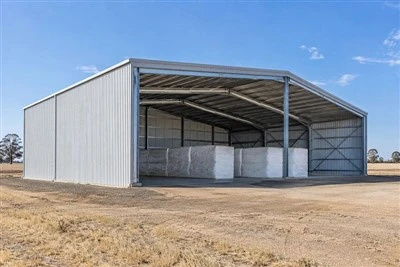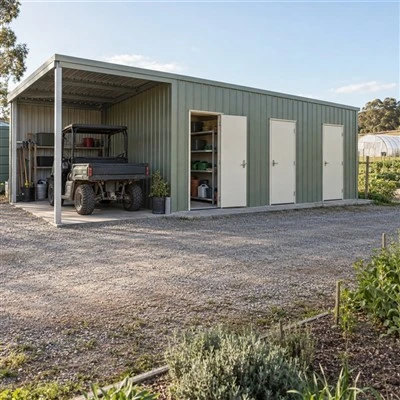

Alright, let’s cut to the chase—if you’ve ever stared at a massive tractor, skid-steer, or that beat-up old utility truck that’s been living in your driveway because your old shed is way too small, you’ve probably wondered if there’s a solution. Enter the double-wide machinery storage shed: not just a bigger shed, but a purpose-built space for the gear that keeps farms, job sites, and small businesses running. As a Machinery Storage Sheds supplier who’s fielded a thousand questions from guys like you and me, let me break this down straight, no fancy jargon.
First, let’s get the basics right. A standard single-wide shed is, well, narrow—usually 12 or 16 feet across—good for lawn mowers, small tools, maybe a couple of ATVs. A double-wide? It’s two single-wide units joined together end to end, but not just crammed side-by-side. We’re talking widths from 20 up to 48 feet typically, with lengths ranging from 30 to 80 feet. That’s enough space to park a full-size tractor with a front loader, a skid-steer, and even a small dump truck without scraping doors or squeezing so tight you can barely move around. And unlike a custom-built metal garage that costs an arm and a leg and takes weeks to erect, double-wides are prefabricated, so we can get them set up in a fraction of the time.
Wait, let’s talk about why this is different from other storage spaces you might have seen. I had a customer last year who tried using a regular equipment storage shed for his 40-horsepower John Deere, and he ended up denting the loader arm because there was only 6 inches of clearance on each side. Double-wides fix that by offering extra interior width and height—most have 12 to 16 foot ceiling clearance, which is non-negotiable for tall machinery. Some even have extra-tall roll-up doors, 14 or 16 feet high, so you can drive a semi-truck or combine in without angling it like you’re pulling into a tight parking spot. That’s the kind of detail that matters when you’re dealing with gear that costs more than most people’s houses.
Now, let’s get into the nitty-gritty of what makes them functional. These sheds aren’t just metal boxes. We design them with ventilation systems to keep moisture from building up—moisture is the enemy of engines, rust, and all those small parts you don’t want to go missing. They also have reinforced floors, usually treated wood or concrete, so you can park heavy machinery on them without the ground settling or the floor cracking. Some models come with built-in power outlets, so you can plug in battery chargers, air compressors, or even run a work light to fix that broken blade at 7 a.m. before a big job. And let’s not forget about security—we can add heavy-duty locks on all doors, even motion sensor lights, because no one wants their $50,000 skid-steer going missing.
I know what you’re thinking: “This sounds expensive.” But here’s the thing—double-wides are way more affordable than building a permanent structure from scratch. When you build a traditional garage or shed, you have to pay for permits, materials, labor, and the time it takes to get everything up. A double-wide comes with most permits pre-approved (depending on your area, obviously), and we can install it in a day or two, not weeks. Plus, they’re portable—if you move your farm or job site down the road, you can take the shed apart and move it, something you can’t do with a concrete slab garage. That flexibility is a game-changer for people who are always on the go.
Let’s compare this to other storage options to make it clear. If you just need to store cotton, for example, a smaller cotton storage shed might work, but that’s not built for heavy equipment. If you have a bunch of tools and smaller equipment, equipment storage sheds are fine, but they lack the width and height for big machinery. Bulk storage sheds are good for supplies like grain or fertilizer, but again, not for vehicles you need to drive in and out of. The car port storage shed is great for basic weather protection, but it doesn’t lock or keep out pests, and it’s open on the sides—perfect for a car, but not for a tractor that you need to keep from rusting during the rainy season. A double-wide machinery storage shed hits that sweet spot between size, functionality, and affordability.
I can’t tell you how many times I’ve heard from customers who thought a double-wide was overkill, only to call me back a year later begging for one because they’d added a new piece of gear and their old shed was too small. Last spring, a guy named Mike from a 200-acre corn farm in Iowa emailed me saying he had a 19-foot-wide tractor and a 17-foot-wide combine, and his old 16-foot shed meant he had to park the combine outside, which led to a rusted hitch after a bad winter. We got him a 36-foot double-wide, and now he can park both inside, with plenty of room for his utility trailer too. He told me it paid for itself in six months because he didn’t have to pay for new metal on the combine. That’s the kind of real-world value we’re talking about.
Another big plus: customization. You don’t have to take a one-size-fits-all model. Want extra doors on the side so you can access the tractor without going through the main roll-up? No problem. Need more storage space for tools and parts inside? We can add lofts or shelving units. Want to match the color of your barn or other outbuildings? We offer a range of paint colors so your shed blends in, not sticks out like a sore thumb. That’s why Machinery Storage Sheds is such a popular category—we tailor each double-wide to your specific needs, not a generic template.
Now, let’s address some common myths. Some people say double-wides are flimsy. Bull. When we build them, we use heavy-gauge steel framing, not thin metal that bends in the wind. They’re engineered to withstand snow loads, high winds, and even heavy rain—perfect for areas with harsh weather. Others say they’re not as durable as permanent structures. Sure, a concrete garage will last longer, but a well-maintained double-wide can last 30 years or more, and it’s way cheaper and more flexible. Plus, if something does go wrong, parts are easy to replace, unlike a custom-built structure where you have to wait for a special order.
Wait, let’s talk about installation. A lot of guys think you need a big crew to put up a double-wide, but that’s not true. We send a small team with all the equipment they need, and they can have it set up on a leveled gravel or concrete pad in a day or two. Gravel is usually cheaper to prepare, and it drains well, which is good for keeping moisture away from the shed’s base. We can help you figure out the best site for it too—close to where you park your other gear, with easy access from the road, so you don’t have to drive five minutes just to get your tractor to the field.
So, who is a double-wide machinery storage shed for? If you’re a farmer with tractors, combines, and other large equipment, yes. If you run a landscaping business with skid-steers, dump trucks, and trailers, absolutely. If you own a construction company with excavators and bulldozers, you’re wasting money on small sheds. Even small business owners with multiple pieces of heavy gear can benefit—we’ve had customers with horse farms that use utility tractors and hay balers, and they love having a space to keep all that protected.


Let me wrap this up. If you’re tired of your machinery getting damaged by the weather, if you’re struggling to fit all your gear into your current shed, if you’re ready for a storage solution that’s affordable, flexible, and built to last, a double-wide machinery storage shed is exactly what you need. As a Machinery Storage Sheds supplier, we’ve helped hundreds of people solve this exact problem, and we can help you too. Don’t wait until your gear gets dented or rusted—reach out to talk through your needs, get a custom quote, and find the right double-wide for your situation.
References:
- American Farm Bureau Federation. (2022). Agricultural Equipment Storage Guidelines and Best Practices.
- National Association of Home Builders. (2021). Prefabricated Storage Structures: Durability and Installation Standards.
- Machinery Dealers National Association. (2023). Cost-Benefit Analysis of Heavy Equipment Storage Solutions.
- U.S. Department of Agriculture. (2022). Weather Protection for Agricultural Machinery: Reducing Rust and Maintenance Costs.