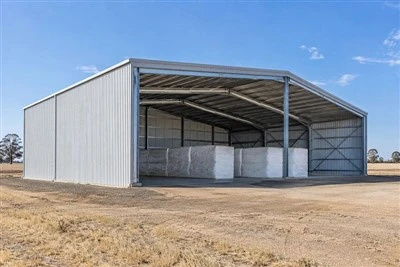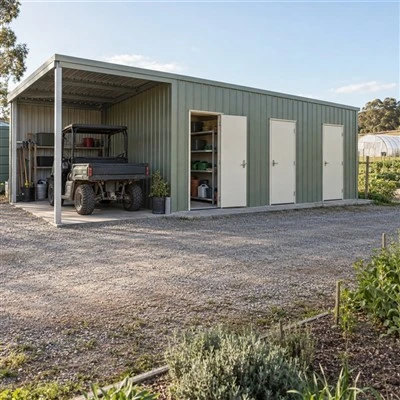

If you run a machinery workshop, you know that condensation in your shed isn’t just a minor annoyance—it’s a silent threat to your equipment, tools, and even the structural integrity of your space. Last year, a regular customer of ours, a small fabrication shop in the Midwest, reached out with a problem: their 10-year-old machinery workshop shed had developed thick, dripping condensation every winter. By the time they called, two of their CNC lathes had developed rust on their precision components, and a section of the shed’s wooden ceiling joists had warped so badly that they had to shut down half their operation for repairs. That’s the kind of cost that catches many workshop owners off guard, especially if they assume condensation is just something “that happens” in enclosed spaces.
As a supplier specializing in Industrial Workshop Sheds, we spend a lot of time talking to clients about this issue, and the good news is that most condensation problems are preventable with intentional design, regular maintenance, and small, consistent habits. Below, we’ll break down exactly why condensation forms in workshop sheds, how to spot the early warning signs, and actionable steps you can take to keep it under control—whether you’re working with an existing space or planning a new build.
First, let’s get the science down: condensation forms when warm, moist air comes into contact with a surface that’s colder than the dew point of that air. For machinery workshops, that usually happens in winter, when the cold outside makes shed walls, ceilings, and concrete floors far colder than the indoor air. Every time you power up a piece of equipment, open a door to bring in parts, or even just breathe, you add moisture to that indoor air. If there’s nowhere for that moisture to go, it condenses on the cold surfaces above your machines, dripping onto tools and parts below. In summer, the dynamic shifts a little: if your shed gets very hot during the day and cools off quickly at night, warm, humid night air can condense on your cool metal machinery, leading to the same rust and mold issues.
The first and most foundational step to preventing condensation is ensuring your workshop shed is properly designed and insulated. A lot of older, custom-built sheds skimp on insulation to save money, but that’s a false economy. Uninsulated walls and ceilings act as heat sinks, pulling warm air away from your machines and creating the perfect conditions for condensation. When we help clients design new spaces, we always recommend closed-cell spray foam insulation, because it not only traps heat inside the shed but also creates a continuous air barrier—no gaps where moist air can seep through and cool down, leading to condensation. For existing sheds, adding rigid foam panels to interior walls and ceilings (with taped seams to eliminate gaps) is a relatively affordable upgrade that can make a huge difference. That’s one of the reasons so many of our clients opt for our Machinery Workshop Sheds, which are engineered with pre-insulated wall and roof panels tailored for heavy equipment use—built to balance durability with moisture control from the start.
Next, ventilation is non-negotiable, but not just any ventilation will work. Many workshop owners make the mistake of opening a door or a window to “let out the moisture,” but that can backfire in cold weather, because it lets in frigid outdoor air that cools the interior surfaces, creating more condensation. Instead, you need controlled, consistent ventilation that exchanges moist indoor air with dry outdoor air without dropping interior temperatures too drastically. The key here is passive ventilation, which works with natural air flow rather than relying on energy-hungry fans. For example, installing ridge vents along the peak of your shed’s roof and box vents along the base of the walls creates a “stack effect”: warm, moist air rises and exits through the ridge, while dry, cooler air enters through the base vents to take its place. We often include passive vent systems in our Industrial Workshop Sheds, but if you’re retrofitting an existing space, adding gable vents paired with exhaust fans (timed to run during your busiest work hours, when moisture levels are highest) can also do the trick. Avoid closing off vents entirely in cold weather—moist air needs an escape, even in winter.
Your floor is another often-overlooked source of condensation. Concrete floors absorb moisture from the ground beneath them, and when they’re colder than the indoor air, that moisture can rise to the surface and condense. For machinery that sits on skids or pads, this is especially bad: the space between the skid and the floor traps damp air, leading to rust on machine bases. The solution here is two-fold: first, install a vapor barrier under your concrete floor when you build it (we include these in our Fully Enclosed Workshop Sheds to prevent ground moisture from seeping in), and second, elevate your heavy machinery off the floor with steel or wooden skids that create space for air circulation underneath. We also recommend using waterproof, interlocking floor mats in high-moisture zones, which not only protect your tools but also allow air to flow under the mats, preventing trapped dampness.
Then there’s your equipment and work habits—small changes that add up to big reductions in moisture. Think about it: every time you clean a machine, you’re adding water to the air. When you paint or finish metal parts, that releases volatile organic compounds and moisture. Even unspilled coolant can evaporate into the air. The goal isn’t to stop doing these things, but to capture that moisture before it becomes airborne. For example, install localized exhaust fans over work areas where you use water or chemicals—like a paint booth or a parts washing station—to pull moisture directly out of the space, instead of letting it circulate through the entire shed. Make sure your drain pipes for any cleaning equipment are pointed away from the shed foundation, too, so excess water doesn’t pool near the walls and seep into the space.
Another habit: don’t leave doors open for long periods, especially in cold or humid weather. We know it’s tempting when you’re moving heavy parts back and forth, but a 10-minute door opening in winter can drop the interior temperature enough to cause condensation on the ceiling. If you need to load or unload large items, use a split-style door or a roll-up door that opens quickly, and keep smaller personnel doors closed when not in use. We also recommend adding weatherstripping to all shed doors and windows to eliminate gaps where moist outdoor air can seep in during humid months.
It’s also important to track moisture levels in your shed. A simple $10 hygrometer (which measures humidity) can alert you when levels are above 50%—the threshold where condensation starts forming. Check it first thing in the morning, when condensation is most likely to be present, and adjust your ventilation or heating if levels are too high. If you notice condensation only on certain parts of your shed, that’s a sign of a problem—maybe a missing piece of insulation, a blocked vent, or a leaky roof that’s letting in water. For example, if condensation is only forming on the north wall, that wall is probably not insulated well, or there’s a gap where cold air is getting in.
We’ve seen too many shop owners wait to fix condensation until it causes damage, but the best approach is proactive. Last quarter, a customer with a 5,000 sq ft shed told us they’d spent $15,000 repairing rust on tools after a single winter. After we worked with them to upgrade their insulation and add a passive vent system, their humidity levels dropped from 65% to 42%, and they haven’t had a condensation problem since. That’s the kind of return on investment that makes these small fixes worth it.


If you’re in the market for a new machinery workshop shed, our products are designed with these moisture-control principles built in. Whether you need a space for small power tools or heavy industrial equipment, our Industrial Workshop Sheds are engineered with pre-insulated panels, integrated vent systems, and sturdy foundations that stand up to condensation and other workshop hazards. For specialized machinery, our Machinery Workshop Sheds can be customized with extra elevation for equipment, reinforced floors, and larger door openings to accommodate your largest tools. And if you need a completely sealed space for precision machinery, our Fully Enclosed Workshop Sheds offer extra insulation and air-tight seals to keep moisture out year-round.
Condensation doesn’t have to be a constant headache for your machinery workshop. With the right design, small structural upgrades, and consistent maintenance habits, you can protect your equipment, avoid costly repairs, and keep your shed running smoothly for years. If you’re ready to assess your current space, or to design a new workshop shed that’s built to prevent condensation, we’re here to help. Reach out to our team to discuss your needs, and we’ll walk you through the best options for your operation.
References:
- American Society of Heating, Refrigerating and Air-Conditioning Engineers (ASHRAE). (2021). Handbook of HVAC Applications. ASHRAE.
- Machinery Repair Technology Association. (2022). Preventing Environmental Damage to Industrial Equipment. MRTA Press.
- International Code Council. (2020). Residential and Commercial Building Codes for Workshop Structures. ICC.
- National Institute for Occupational Safety and Health (NIOSH). (2021). Humidity Control Guidelines for Small Industrial Workplaces. U.S. Department of Health and Human Services.